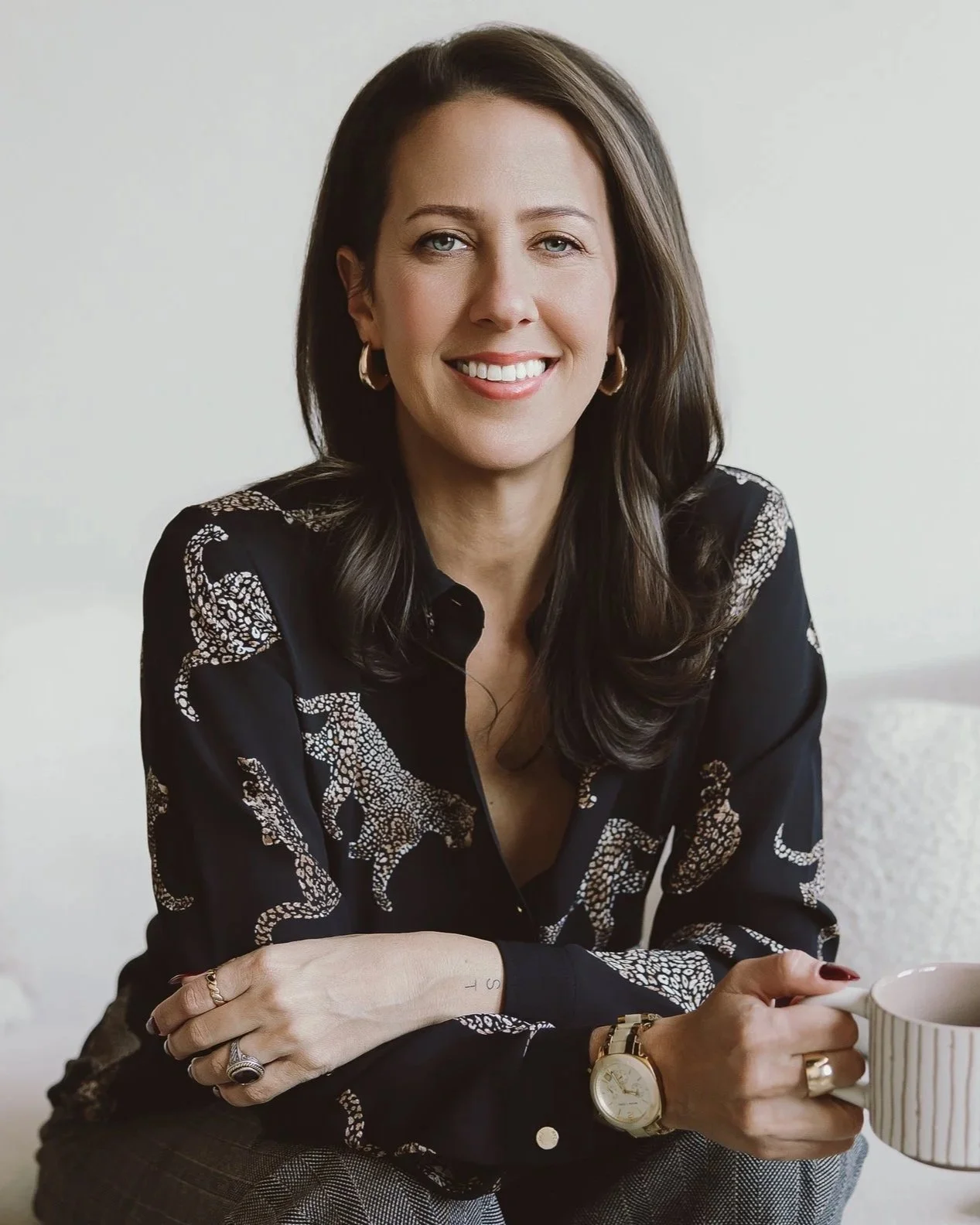
Meet Jen Leone
Jen Leone is a founder, creative director, brand strategist, and photographer known for building emotionally resonant brands that do more than scale businesses—they shift culture and create lasting connection.
By 24, she had already earned national recognition in publications including The New York Times and the Associated Press for launching Philadelphia’s first luxury pet hotel. Fueled by a vision to elevate an overlooked industry, she immersed herself in every layer of the business—from grooming and animal handling to operations and facility design—ultimately creating a pioneering concept in 2005 that set a new standard in the market.
At 30, she founded The LB Brand, the first lifestyle brand for modern motherhood. What began as a bold point of view quickly became a global movement. Worn by mothers worldwide and coveted by celebrities such as JLo and Gwen Stefani, the brand was featured in outlets including DailyMail, OK! Magazine, People, InStyle, and E!. In the early days of Instagram, Jen organically built a community of more than 30,000 women. It was never just about product. It was about identity. The brand’s slogan, “Protector Lover Mother,” became a cultural marker—worn at The Women’s March, during the Me Too movement, and even tattooed by women who saw themselves reflected in its message.
After six years of digital growth, she expanded into a flagship store at Atlanta’s iconic Ponce City Market in 2018. There, she created immersive brand activations, artist collaborations, and in-person experiences that deepened community beyond the screen. It revealed one of her defining strengths: an instinctive understanding of how to build brands with a heartbeat—brands that magnetize, connect, and move people both digitally and physically.
From the outside, it looked like uninterrupted momentum. Behind the scenes, Jen was navigating profound personal loss, including the deaths of her mother, brother, and sister in a compressed span of years. That season reshaped her perspective, deepened her creative lens, and refined her understanding of what truly endures.
Today, Jen is the founder of House of 88, a creative ecosystem uniting brand strategy, design, photography, content studio environments, and education under one architecture. Drawing from her entrepreneurial experience, instinct, and photographic eye, she partners with founders and companies to build brands that are culturally relevant, emotionally intelligent, and structurally sound.
Her work is informed not only by what she has built, but by what she has lived. She brings both high-level business acumen and rare human depth to every engagement, helping clients create brands that feel as powerful in person as they do on paper.
This is not branding as decoration.
It is branding with a heartbeat.